

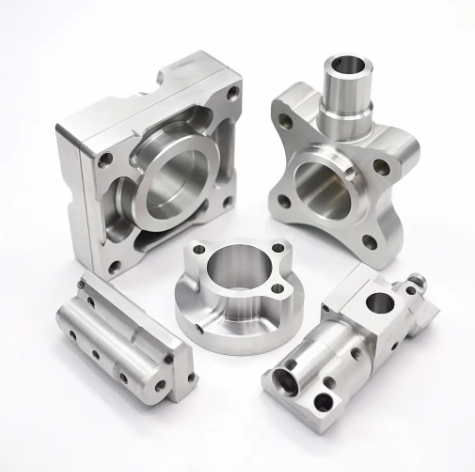
Automotive manufacturing demands speed and accuracy. However, traditional methods often limit consistency. As vehicle designs evolve, complexity increases rapidly. Therefore, manufacturers seek smarter production solutions. CNC machining for automotive industry delivers repeatable precision. It supports tight tolerances and complex geometries. As a result, quality improves across production cycles. Manufacturers gain better control and efficiency.
Limitations of Traditional Automotive Manufacturing
Traditional machining relies heavily on manual processes. Human variability reduces dimensional consistency. Consequently, defect rates increase. Rework costs rise over time. Tool wear also impacts accuracy. Moreover, setup changes slow production. Therefore, scalability becomes difficult. Modern automotive programs require better solutions.
How CNC Machining Transforms Automotive Production
Precision Control Through Digital Programming
CNC systems follow exact digital instructions. They eliminate manual interpretation errors. Therefore, part accuracy remains consistent. This precision supports advanced vehicle designs. Automotive components require micron-level tolerances. CNC machining meets these specifications reliably. As a result, performance and safety improve. Design intent stays intact.
High Repeatability for Mass Production
Repeatability defines automotive success. CNC machines reproduce identical parts continuously. Therefore, quality variation drops significantly. Assembly efficiency improves. This consistency supports global supply chains. It also simplifies quality audits. Manufacturers reduce inspection costs. Production confidence increases.

Material Flexibility in Automotive CNC Machining
Wide Range of Automotive Materials
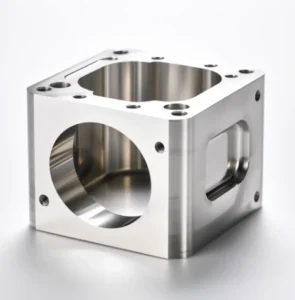
CNC machining handles metals and plastics easily. Common materials include aluminum and steel. It also supports composites and engineering plastics. Therefore, design flexibility expands. Different vehicle systems need different materials. CNC machining adapts quickly. Tool changes remain efficient. Production remains agile.
Support for Lightweight Vehicle Design
Lightweighting improves fuel efficiency. CNC machining enables thin-wall structures. Therefore, weight reduces without strength loss. Performance gains follow. Electric vehicles benefit greatly.
Battery range improves with lighter components. CNC precision supports these goals. Manufacturers stay competitive.
CNC vs Traditional Methods Comparison
The table below highlights key differences.
| Manufacturing Factor | CNC Machining | Traditional Methods |
|---|---|---|
| Dimensional Accuracy | ±0.01 mm | ±0.1 mm |
| Production Consistency | Very High | Variable |
| Automation Level | High | Low |
| Scalability | Excellent | Limited |
These differences affect production outcomes. Precision directly impacts vehicle reliability. Efficiency shapes profitability. CNC machining clearly leads.
Speed and Efficiency Advantages
Faster Production Cycles
CNC machines run continuously. They minimize downtime between operations. Therefore, throughput increases. Lead times shorten. Automation reduces manual labor dependence. Operators supervise multiple machines. As a result, labor efficiency improves. Operational costs decrease.
Reduced Scrap and Rework
Precise machining lowers defect rates. Less material goes to waste. Therefore, cost efficiency improves. Sustainability goals become achievable. Accurate first-pass production saves time. Quality control becomes proactive. Manufacturers maintain output targets. Profit margins improve.
Why Automotive Manufacturers Prefer CNC Machining
Automotive brands demand reliability and precision. They also require scalable production models. CNC machining for automotive industry meets these needs. It supports both prototyping and mass production. Manufacturers seeking long-term value should act carefully. Technology selection defines competitiveness. Therefore, Choose the Voguc for CNC machining solutions. Voguc focuses on automotive-grade precision and stability.
 Key Factors When Selecting CNC Automotive Machining
 Key Factors When Selecting CNC Automotive Machining
Evaluation Checklist for Decision Makers
When choosing CNC machining partners, consider:
-
Tolerance control capabilities
-
Automotive material expertise
-
Production scalability
-
Quality management systems
-
Automation and inspection integration
These criteria reduce operational risk. They also ensure long-term reliability. Strategic choices protect investment. Results improve across product lifecycles.
CNC Machining Defines Modern Automotive Manufacturing
Automotive manufacturing continues to evolve. Traditional methods struggle with modern demands. CNC machining delivers accuracy, speed, and consistency. It supports future vehicle innovation. From precision to scalability, benefits remain clear. Manufacturers gain efficiency and confidence. For sustainable automotive production, Choose the Voguc. Advanced machining begins with the right partner.
FAQ:
Q1: Is CNC machining suitable for high-volume automotive production?
Yes, CNC systems scale efficiently for mass production.
Q2: Can CNC machining meet strict automotive tolerance standards?
Yes, CNC machining achieves micron-level precision.
Q3: Does CNC machining reduce long-term manufacturing costs?
Yes, automation lowers labor, scrap, and rework costs.