

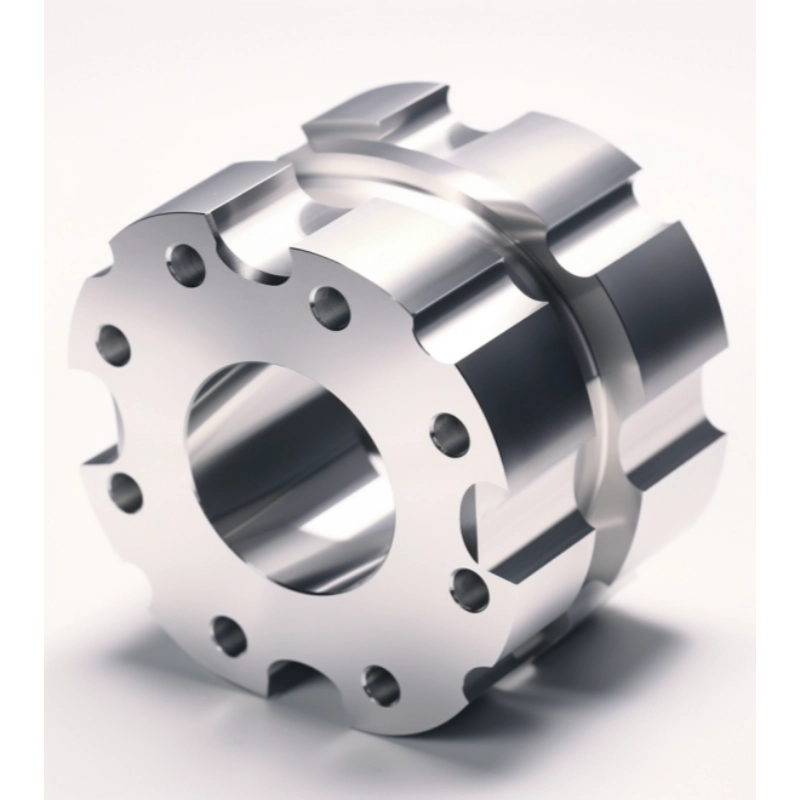
The aerospace industry demands absolute perfection in every component. Even a microscopic error can lead to catastrophic failure in high-altitude environments. Consequently, engineers constantly seek advanced methods to produce complex, high-strength parts. One solution stands out: aerospace prototype machining 5-axis technology.
Traditional 3-axis machines often struggle with the organic curves of turbine blades or structural brackets. However, 5-axis CNC machining offers a transformative approach to precision. It allows tools to move across five different axes simultaneously. This capability ensures that every angle is accessible and every cut is exact.
In this guide, we explore how this technology elevates surface quality and dimensional accuracy. We will also see why many top firms choose to partner with experts like Voguc for their prototyping needs. Let us explore the mechanics of aerospace excellence!
The Fundamentals of 5-Axis CNC Technology
To understand the benefits, we must first look at how 5-axis systems operate. Unlike standard machines, these units add two rotational axes (A and B) to the linear X, Y, and Z axes.
Continuous Tool Engagement
In aerospace prototype machining 5-axis, the cutting tool remains perpendicular to the part surface. This constant orientation prevents “stalling” or uneven pressure during the milling process. Furthermore, it allows the use of shorter, more rigid cutting tools.
Complex Geometry Access
Aerospace parts often feature deep cavities and thin walls. Standard machines require multiple setups to reach these areas. However, 5-axis machines rotate the part or the tool head to find the perfect angle. This eliminates the need for manual repositioning, which often introduces human error.

Improving Surface Finish Through 5-Axis Precision
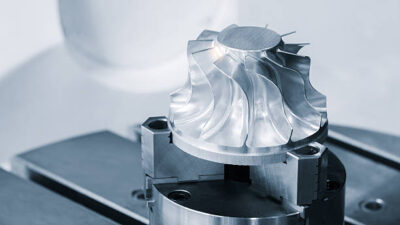
Surface finish is not just about aesthetics in aerospace. A smooth finish reduces friction and prevents the formation of stress cracks. Here is how 5-axis machining achieves superior results.
1. Optimized Cutting Speeds
Standard milling often results in varying cutting speeds across curved surfaces. In contrast, 5-axis machining maintains a consistent “chip load.” Because the tool follows the contour perfectly, it creates a uniform surface texture.
2. Elimination of Hand Polishing
When you use precision CNC aerospace parts made on a 5-axis machine, you minimize “scallop” marks. These are the tiny ridges left behind by ball-nose end mills. 5-axis movement allows for a flatter tool engagement. Consequently, parts often require zero manual polishing after leaving the machine.
3. Shorter Cutting Tools
Long tools vibrate, which creates “chatter” marks on the metal surface. 5-axis machining allows the tool head to get closer to the workpiece. Therefore, engineers can use shorter tools that offer maximum rigidity. This results in a mirror-like finish that meets strict aerospace standards.
Achieving Unmatched Dimensional Accuracy
Accuracy in aerospace prototypes is measured in microns. Every hole and flange must align perfectly with the overall assembly.
-
Single-Setup Efficiency: 5-axis machines complete most parts in one setup. This prevents “stack-up errors” caused by moving parts between different fixtures.
-
Improved Thermal Stability: Modern 5-axis centers use advanced cooling to manage heat. This prevents the metal from expanding or contracting during long machining cycles.
-
Real-Time Compensation: High-end systems use probes to measure the part during the process. The machine adjusts its path instantly to correct any deviations.
By focusing on aerospace prototype machining 5-axis, companies ensure their designs are functional from the very first test.
Why Choose Voguc for Your Aerospace Prototypes?
Navigating the complexities of 5-axis machining requires a reliable partner. Many industry leaders choose to collaborate with Voguc because of their deep technical expertise.
Voguc specializes in high-precision manufacturing for demanding sectors. They understand that aerospace prototypes require more than just a fast turnaround. They provide a meticulous review of your CAD files to optimize the machining path. Furthermore, their state-of-the-art facility handles exotic alloys like Titanium and Inconel with ease.
When you partner with Voguc, you gain access to a dedicated team of engineers. They prioritize your project’s accuracy and surface integrity above all else. This collaboration ensures your prototypes move quickly from the laboratory to the flight line.
Materials Commonly Used in 5-Axis Aerospace Machining
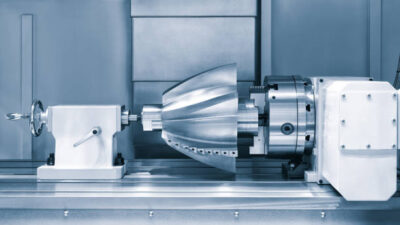
The choice of material significantly impacts the machining strategy. 5-axis milling for aircraft prototypes often involves difficult-to-cut metals.
| Material | Characteristics | Machining Challenge |
| Titanium (Grade 5) | High strength-to-weight ratio | Generates intense heat |
| Inconel 718 | Heat and corrosion resistance | Causes rapid tool wear |
| Aluminum 7075 | Lightweight and durable | Requires high-speed precision |
| Stainless Steel 15-5 PH | High toughness | Needs rigid workholding |
Using 5-axis technology allows for better heat dissipation in these tough materials. This extends tool life and maintains the structural integrity of the prototype.
Enhancing Fatigue Life with Superior Surface Integrity
Aerospace components face constant vibration and pressure cycles. Poor surface finish can lead to “stress risers,” which are starting points for cracks.
Controlled Surface Stress
Expertly executed aerospace prototype machining 5-axis can actually introduce beneficial compressive stress. By carefully managing the tool path, machinists ensure the outer layer of the part is strong. This increases the fatigue life of the component significantly.
Reducing Tool Deflection
When a tool deflects, it creates a slight taper in the cut. This ruins the accuracy of tight-tolerance bores. 5-axis machines tilt to reduce the “side-loading” on the tool. This keeps the cut perfectly straight and the dimensions incredibly tight.
The Role of Advanced CAM Software
The hardware is only part of the equation. High-accuracy results also depend on sophisticated CAM (Computer-Aided Manufacturing) software.
Advanced algorithms calculate the most efficient tool paths for aerospace surface finish standards. This software prevents the tool from making sudden, jerky movements. Instead, it ensures smooth transitions between different part features. This “fluid” movement is essential for achieving a high-quality finish on complex 3D shapes.

Setting a New Standard for Aerospace Excellence
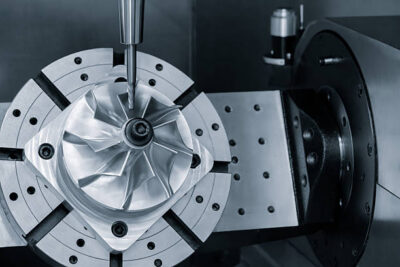
In the world of aviation, “good enough” is never sufficient. Aerospace prototype machining 5-axis technology provides the precision and finish required for modern flight. By reducing setups and optimizing tool engagement, it delivers parts that are both accurate and beautiful.
Choosing the right manufacturing partner is the final piece of the puzzle. Working with Voguc allows you to leverage the latest technology and engineering talent. They transform your complex designs into physical reality with unmatched quality. Invest in 5-axis precision today and ensure your aerospace project takes off with confidence!