


Modern robotics demands extreme accuracy. Every movement must follow a precise path, and every component must support consistent performance. Because robots operate in fast, complex, and dynamic environments, engineering teams require components that deliver stability and durability. CNC machining for robotics components now stands out as the ideal solution for this high-accuracy requirement.
Robotics influences many industries. Industrial robots manage production lines. Surgical robots assist complex operations. Logistics robots move goods with high efficiency. Additionally, service robots interact with people in daily environments. Each robot depends on precise mechanical parts. Therefore, CNC machining plays a central role in ensuring reliable motion control, structural integrity, and long-term accuracy.
Why Robotics Systems Need Extremely Accurate Components
Robotic systems rely on precise mechanical coordination. Their sensors, motors, actuators, and structural parts work together in continuous cycles. Even a small dimensional error can reduce stability. Therefore, engineers choose CNC machining because it ensures tight control during manufacturing.
Motion Accuracy Depends on Tight Tolerances
A robot’s movement path must stay stable. Small alignment errors can create vibration or drift. Because CNC machining delivers micron-level tolerances, it reduces these risks. Additionally, precise fits improve motion smoothness and predictability.
Mechanical Strength Supports Reliable Actuation
Robots often perform repetitive and high-force tasks. This requires strong components. CNC machining supports robust metals and advanced polymers. Therefore, robots can handle stress without losing accuracy or stability.
Key Advantages of CNC Machining for Robotics Components
CNC machining provides multiple advantages that directly improve robotic motion systems. Each advantage helps engineers design systems that operate with better accuracy, efficiency, and durability.
1. Consistent Dimensional Accuracy for Smooth Motion
CNC machining creates components that match digital models with high consistency. This supports:
-
Accurate joint movement
-
Precise rotational alignment
-
Stable actuator performance
-
Smooth linear motion
Because every part follows the exact specification, the motion system stays predictable.
2. Reliable Repeatability for High-Cycle Tasks
Robots repeat actions thousands of times. Therefore, repeatability matters. CNC machining delivers consistent shapes and surfaces. As a result, the robot’s performance remains stable through long work cycles. This improves:
-
Motion reliability
-
Path accuracy
-
Operating efficiency
-
Long-term durability

3. Wide Material Flexibility to Meet Application Needs
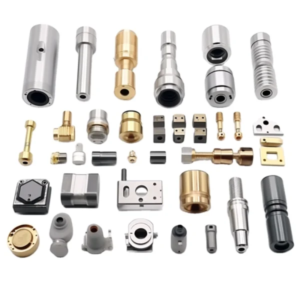
Different robotics systems require different materials. CNC machining handles a broad material range, including:
-
Aluminum
-
Stainless steel
-
Titanium
-
Brass
-
Carbon fiber composites
-
Engineering plastics such as PEEK and nylon
This flexibility allows engineers to design strong and lightweight structures that match any task requirement.
4. Strong Structural Stability Under Mechanical Stress
Robots often face load, vibration, or rapid motion. CNC-machined parts support these conditions because they come from solid material blocks. This increases:
-
Load-bearing strength
-
Resistance to vibration
-
Long-term structural stability
-
Motion precision
Thus, robots maintain consistent accuracy even in demanding environments.
5. Fast Prototyping for Robotics Innovation
Robotics innovation happens quickly. Engineers must test new designs without long delays. CNC machining accelerates this process. Because it requires no special tooling, teams can create prototypes rapidly. This supports:
-
Faster design iterations
-
Quicker testing cycles
-
Lower development risks
As a result, teams reach functional prototypes faster and more efficiently.
6. Smooth Surface Finish for Low-Friction Operation
Robotic motion benefits from smooth surfaces. CNC machining delivers refined finishes. This reduces friction and improves movement efficiency. Therefore, robots move smoothly, quietly, and with better energy control.
How CNC Machining Improves High-Accuracy Motion Systems
Robotic motion systems rely on mechanical precision. CNC machining helps motion performance in several ways.
Improved Alignment
CNC machining ensures perfect alignment between joints, housings, and actuator mounts. This improves path stability.
Reduced Mechanical Backlash
Tight fits reduce backlash. Consequently, robots maintain accurate movement patterns.
Better Vibration Control
CNC-machined components support weight evenly. This reduces vibration during motion.
Higher Stiffness for Stronger Support
Strong machined structures improve stiffness. As a result, control systems perform better.
Where Robotics Uses CNC-Machined Components
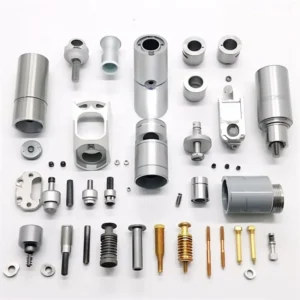
Many robotics categories rely heavily on CNC machining.
Industrial Automation Robots
Industrial robots require strength and repeatability. CNC machining supports both goals.
Medical and Surgical Robots
These systems need extreme accuracy. CNC machining helps them perform delicate tasks safely.
Logistics and Warehouse Robots
Reliable structural parts support fast and stable motion cycles.
Humanoid Robots
Complex joints, brackets, and frames require precision machining.
Autonomous Mobile Robots (AMRs)
CNC machining creates strong housings for sensors, motors, and navigation modules.
Why Many Robotics Manufacturers Choose Voguc
Selecting a skilled machining partner is critical. At Voguc, we focus on precision CNC machining for robotics components. Many engineering teams choose us because:
-
We maintain advanced multi-axis CNC equipment
-
We support prototype and small-batch production
-
We hold strict tolerance control
-
We work with metals and high-performance polymers
-
We deliver fast production and stable quality
-
We understand robotics engineering needs
Because robotics requires stability and accuracy, Voguc offers solutions that strengthen motion systems and improve long-term performance.
Conclusion
Robotics relies on precise mechanical components. CNC machining supports this need with accuracy, strength, durability, and design flexibility. It improves motion stability and supports high-performance systems across many industries. Therefore, CNC machining remains essential for modern robots that must move with exact control.
If you want precise and reliable robotics components, consider Voguc. Our CNC machining services help engineering teams achieve accuracy, speed, and structural strength.
FAQs
1. Why does robotics depend on CNC machining?
Robotics requires tight tolerances and strong structures to maintain motion accuracy.
2. Which materials work best for robotic components?
Aluminum, steel, titanium, PEEK, and nylon offer strength and stability.
3. Can CNC machining support fast robotics development?
Yes. CNC machining provides rapid prototyping and quick design adjustments.